Image
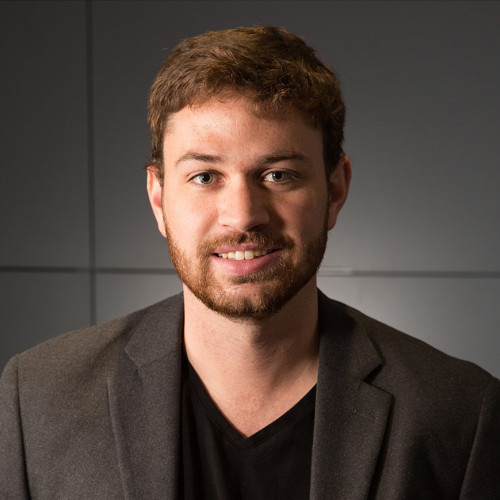
Chris Boyce
Associate Professor of Chemical Engineering
Chris Boyce examines the fundamentals of multiphase flows to spark advances in energy, health, and the environment. He uses magnetic resonance imaging (MRI) and computational modeling to gain insights into complex systems.
Chris Boyce’s research characterizes multiphase and granular flows using experiments and simulations, identifying methods to control flow instabilities, mixing and segregation to ultimately make mining and energy processes and technologies more efficient and environmentally friendly.
Flow, mixing and segregation of granular (sand-like) particles, such as ores, seeds and catalytic particles, are critical to a range of processes and devices in energy production, mining, pharmaceuticals, agriculture and nature. The opaque nature of these flows as well as the complex rheology involving dynamic transitions between fluid-like and solid-like behavior have long hampered accurate modeling as well as control and scale-up of multiphase granular flow devices. Boyce develops and utilizes magnetic resonance imaging (MRI) and optical imaging as well as discrete and continuum modeling techniques for characterizing multiphase granular flows and associated flow instabilities. His research also develops novel techniques combining gas flow and vibration to fluidize granular materials to undergo structured, scalable flow dynamics with controlled mixing or segregation of particles. Beyond fundamental studies of the mechanisms underlying structured flow instabilities, Boyce applies these structured flows to technologies in mining, energy and water treatment technologies.
Boyce received his BS in Chemical Engineering and Physics from MIT and his PhD in Chemical Engineering from the University of Cambridge in 2015 as a Gates Cambridge Scholar, where he won the Danckwerts-Pergamon Award for the best PhD thesis in Chemical Engineering. He completed postdoctoral research positions at Princeton University and ETH Zurich before joining Columbia in 2018. He is an active member of the American Institute of Chemical Engineers (AIChE) Particle Technology Forum (PTF) and the American Physical Society (APS) Division of Fluid Dynamics (DFD), and he serves on the editorial board of the journal Powder Technology. He has been recognized with the National Science Foundation (NSF) CAREER Award, the Office of Naval Research (ONR) Young Investigator Program Award, the Forbes 30 Under 30 List in Science and the Sabic Young Professional Award for excellence in particle technology from the AIChE.
Research Areas
- Energy & Environment
- Multiphase Flows
- Granular Physics
- Magnetic Resonance Imaging
- Multiscale Modeling
Additional Information
-
Professional Affiliations
- American Institute of Chemical Engineers (Particle Technology Forum)
- American Physical Society (Division of Fluid Dynamics)
-
Honors & Awards
- ONR Young Investigator Award, 2023
- NSF CAREER Award, 2022
- Janette and Armen Avanessians Diversity Award, Columbia University SEAS, 2021
- Columbia Provost’s Grants Program for Junior Faculty who Contribute to the Diversity Goals of the University, 2020
- Sabic Young Professional Award from the AIChE for outstanding contributions to particle technology from an individual under 40, 2019
- Forbes 30 Under 30 in Science, 2019
- Danckwerts-Pergamon Prize for the best PhD thesis related to chemical engineering, University of Cambridge, 2015
- Gates Cambridge Scholar, 2011-2014
-
Professional Experience
- Associate Professor of Chemical Engineering Columbia University, 2023-Present
- Assistant Professor of Chemical Engineering, Columbia University, 2018-2023
-
Education
- PhD, Chemical Engineering, University of Cambridge
- BS, Chemical Engineering and Physics, Massachusetts Institute of Technology