Faculty & Staff
What to Know About New York City's Air Quality Emergency
Atmospheric chemist V. Faye McNeill explains our new, smoky normal — and how to stay safe.
July 17, 2026
Grant Currin
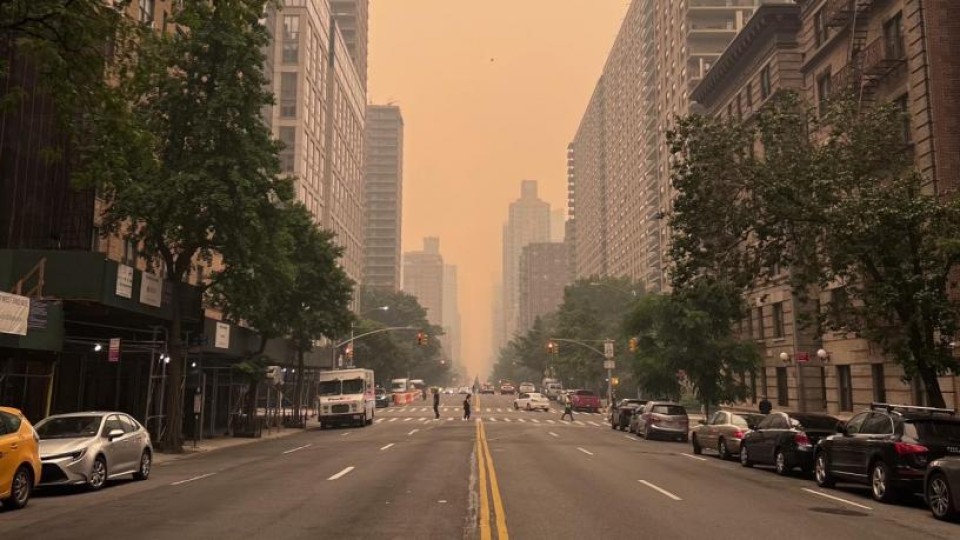
Orange skies and smoky air have become a familiar part of summer in North America. As wildfires continue spreading across eastern Canada, a giant plume of smoke is causing sore throats and headaches, increasing emergency room visits, and leading to uncertain long-term consequences for millions of people.
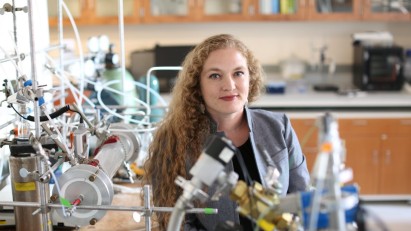
V. Faye McNeill is an atmospheric chemist and expert in air quality. She holds professorships in chemical engineering, earth and environmental sciences, and climate. We spoke with McNeill for a short conversation about New York City’s air quality emergency.
This interview has been edited for length and clarity.
Image
Why have air quality emergencies become so common? Should we now expect them as a normal part of the summer?
It's an unfortunate reality that wildfires are becoming commonplace across North America, and we are all becoming more familiar with their impacts. It used to be unusual for NYC to have smoky days like this, but intense fires from the North are bringing poor air-quality episodes here more often. Those fires are becoming more frequent and intense as climate changes.
What have researchers learned about the health effects of these short, intense bouts of air pollution?
Unfortunately, there have been enough of these episodes worldwide in recent years that scientists are able to collect and analyze health data associated with wildfire air quality events. They find, unsurprisingly, that there are more emergency room visits and hospitalizations with respiratory issues during these episodes, and the rate of these visits increases with smoke exposure. More research needs to be done on the long-term effects of intense wildfire smoke exposure and repeated exposures. We also need more information on the specific toxicity of wildfire smoke, both close to the fire and after it has been transported far away.
How should cities respond to these events?
Mayor Zohran Mamdani and NYC have done a great job amplifying the U.S. EPA's public health messaging around poor air quality. NYC is offering free masks, keeping cooling centers open, and spreading the word about these resources. Cooling centers have a double benefit — first, the combination of high temperatures and poor air quality amplifies the negative health impacts we would experience from either of these things alone. Second, the air conditioning in these centers has an air filtering effect, allowing New Yorkers to get a breath of fresher air indoors. NYC is setting a great example for other cities to follow.
What can people do to stay safe?
The EPA and NYC have very helpful and easy-to-follow guidelines for air quality emergencies. When the Air Quality Index is in the "Very Unhealthy" category, everyone should avoid strenuous outdoor activity, but those in sensitive groups, such as those with heart or lung conditions, children, and the elderly, should stay indoors as much as possible.
For me, this meant opting to exercise in an air-conditioned room today, and staying inside in the evening with the windows closed, AC on in rooms where we have it, and HEPA filters in other parts of the apartment. Wearing a filtering mask (KN95, N95, KF94) outdoors may help if you have asthma or another heart or breathing condition, or if you are suffering allergy-like symptoms from the smoke.